English
 日本語
日本語
 Deutsch
 Español
No.158, Baoqun Road, Yaozhuang Town, Jiashan County, Jiaxing City, Zhejiang Province , China
News
Home / News / Industry News / How Much Does Steel Structure Frame Welding Cost? Complete 2026 Pricing Guide & Quote Strategy

Content
When sourcing steel structure frame welding services, understanding current market pricing is essential for budget planning and vendor evaluation. The costs of steel welding are not static—they fluctuate based on multiple variables, from labor rates to material specifications and geographic location.
Based on industry standards in 2026, here are the typical pricing benchmarks for different welding scenarios:
Applies to standard structural members with straightforward geometry
Hand welding method, suitable for field connections and repairs
Includes steel material, welding, surface treatment, and protective coating
Important Note: The figures above represent market averages and are subject to significant variation based on your specific project parameters. Actual quotes depend on drawing complexity, material grade, production volume, and regional labor costs. Always request a detailed breakdown before committing to any supplier.
Why Price Varies So Much: A simple butt weld on a thin plate costs far less per unit than a complex multi-pass weld on heavy-section H-beam. Similarly, a supplier in a high-cost region will naturally charge more than one in a lower-cost area, even for identical work quality.
To understand why your quote might differ from these benchmarks, you need to recognize the key cost drivers. These factors interact in complex ways, so a single-variable change can shift your final price substantially.
Different welding methods have vastly different productivity rates and equipment costs:
A supplier using automated narrow-gap welding on your heavy-section H-beams might quote 20-30% lower than one using traditional multi-pass GMAW, even at the same hourly rate.
Not all steel behaves the same under welding. Material properties directly influence process difficulty and labor time:
| Material Grade | Yield Strength | Welding Complexity | Relative Cost Impact |
|---|---|---|---|
| Q235 (Mild Steel) | 235 MPa | Straightforward, standard procedures | Baseline |
| Q345B (High-Strength Steel) | 345 MPa | Requires preheat, controlled cooling, certified procedures | +15-25% |
| Q420B/Q460B (Ultra-High-Strength) | 420-460 MPa | Strict thermal control, specialized filler metals, extensive inspection | +30-50% |
Plate thickness compounds this effect. Welding a 50mm plate requires multiple passes and careful heat management; a 400mm-thick section demands preheating, post-weld heat treatment, and significantly more skilled labor. Thick-plate welding typically adds 50-100% to labor costs compared to thin sections.
Gravity works against welders. Horizontal (flat) welding is fastest and cheapest; vertical and overhead positions slow productivity dramatically:
If your design requires extensive overhead welding or work in confined spaces, expect significant labor cost premiums. Conversely, asking a designer to rotate members to maximize flat-position welding can cut your manufacturing cost by 20% or more.
Higher quality standards mean more testing, rework risk, and documentation burden:
Economies of scale are powerful in welding. A one-off project costs far more per unit than a high-volume production run:
If you can consolidate multiple projects or accept longer lead times for better batching, you may negotiate substantially better rates.
Welding is inherently labor-intensive. Labor costs vary dramatically by region due to wage differences, skill availability, and utility costs. A job that costs USD 50,000 in a high-wage region might be USD 20,000 in a lower-cost area, for identical quality and timeline. This reality drives global supply chain decisions.
Understanding pricing factors is only half the battle. Proactive cost optimization requires strategic decisions at design, specification, and execution stages.
The cheapest welding cost is the one you avoid. Before fabrication even begins, review your structural design for weld reduction opportunities:
Choosing the right grade upfront avoids costly rework and inspection delays:
The order in which welds are executed profoundly affects distortion, residual stress, and rework requirements. Advanced manufacturers use finite element simulation to optimize welding sequences:
Suppliers offering simulation-based sequence optimization may charge slightly more upfront but typically save 15-30% on total labor and rework, making them a superior value proposition.
Match the welding method to your specific job profile:
Hidden costs lurk in transportation and scheduling:
Quality assurance is non-negotiable, but overspecification wastes money:
Armed with knowledge of cost drivers and optimization opportunities, you're ready to request quotes. But how you present your project to suppliers dramatically influences quote accuracy and your negotiating position.
A vague inquiry yields vague, unusable quotes. Providing detailed information upfront signals professionalism and often unlocks better pricing:
Once you have quotes, dig deeper to understand what you're actually paying for and whether value is genuine:
Some supplier quotes should immediately raise concern:
Once you've selected a supplier and fabrication is underway, active project management reduces surprises and keeps costs in control.
The first two weeks set the tone for the entire project:
Regular check-ins catch problems early when they are cheaper to fix:
Upon delivery, a systematic inspection confirms the fabrication met specifications:
Fabricators adjust quotes based on shop load, material availability, and production sequence flexibility. During slow periods, a supplier may offer discounts to maintain workforce. A job that fits naturally into their current production schedule costs less than one requiring special setup. Also, if you allow flexible timing or can batch your job with others, you unlock economies of scale that translate to lower costs.
Not necessarily. The lowest price often reflects lowest cost to the fabricator, not best value to you. A cheapest quote that delivers late, requires extensive rework, or lacks proper documentation may end up costing far more in lost time and project delays. Evaluate the total cost of ownership: quoted price plus risk factors like schedule adherence, quality reputation, and post-delivery support.
Focus on design-phase optimization and process efficiency rather than cutting corners on materials or inspection. Reduce weld length through better connection details, consolidate projects for volume discounts, and ask fabricators to propose process improvements or automation investments that lower labor cost. These approaches maintain quality while reducing cost.
Simple frames with few connections might be fabricated in 3-4 weeks. Complex, large-volume projects can extend to 8-12 weeks or more. The timeline depends on drawing approval delay, material procurement, production capacity, testing requirements, and coating processes. Unrealistic demands for impossibly fast turnaround incur premium costs and risk quality. A realistic schedule negotiated upfront prevents friction and cost overruns.
Yes, for projects with significant total fabrication cost (above USD 50,000-100,000). Simulation-based sequence optimization often saves 15-30% in labor and rework, easily justifying the upfront engineering cost. For smaller projects, the optimization investment may not break even, so rely on fabricator experience instead.
Classify welds into risk categories: critical (safety-sensitive, high stress, fatigue-prone) welds receive 100% inspection; standard welds undergo visual inspection only or sample-based testing; non-critical welds require visual inspection. This risk-based approach provides confidence where it matters while avoiding unnecessary testing on non-critical areas. Cite applicable codes (AWS D1.1, EN 1090, etc.) to provide objective criteria.
Often yes, but carefully weigh the savings against additional risks: longer lead times, communication delays, import duties, freight costs, and quality coordination challenges. Offshore works best for high-volume, standardized projects with clear specifications and mature inspection protocols. For one-off or complex custom work, proximity to local fabricators usually outweighs labor-cost savings.
Changes always incur costs. Depending on the timing, a change order might require revisiting the welding sequence, re-qualifying procedures, rescheduling labor, or purchasing additional materials. To minimize impact, front-load all design decisions before fabrication begins. If changes are unavoidable, notify the fabricator immediately and negotiate change costs fairly. Last-minute changes to critical path items are the most expensive.
No. Stress relief is required for high-strength steels (Q345B and above) in certain applications, thick sections subject to fatigue, or pressure-vessel fabrication. For standard structural steel, ASTM A36 or equivalent in moderate loading, as-welded condition often suffices. Your code or standard (AWS D1.1, EN 1090) will specify when PWHT is mandatory. Discuss this with your fabricator during planning to avoid unnecessary cost.
For straightforward projects with a qualified fabricator, budget 5-10% contingency. For complex, first-of-a-kind, or high-precision work, reserve 10-20%. This cushion covers minor defects, inspections that trigger repairs, design clarifications, and unforeseen site conditions. Communicate this reserve to your fabricator upfront so both parties understand that some flexibility exists without threatening the project schedule or budget.
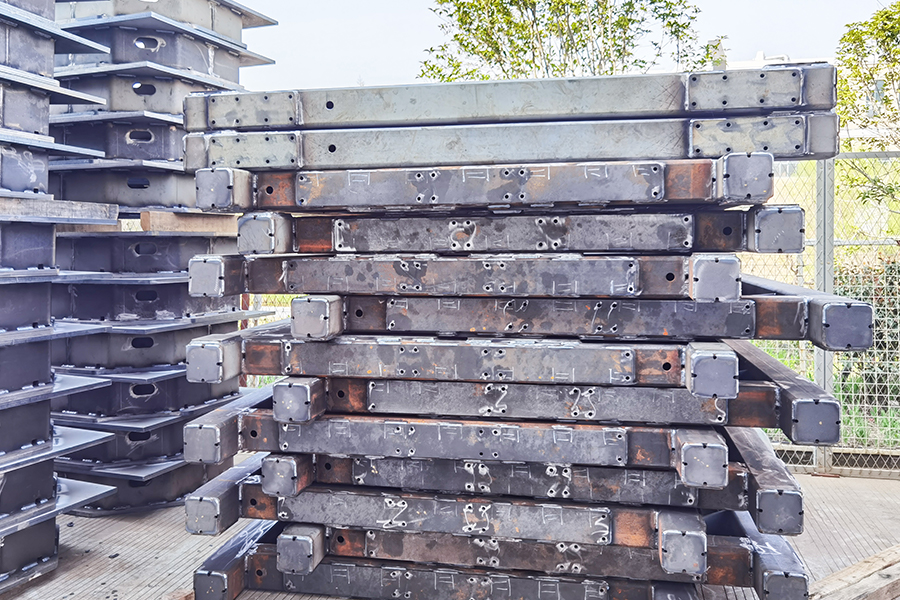
How Much Does Steel Structure Frame Welding Cost? When sourcing steel structure fram...
READ MORE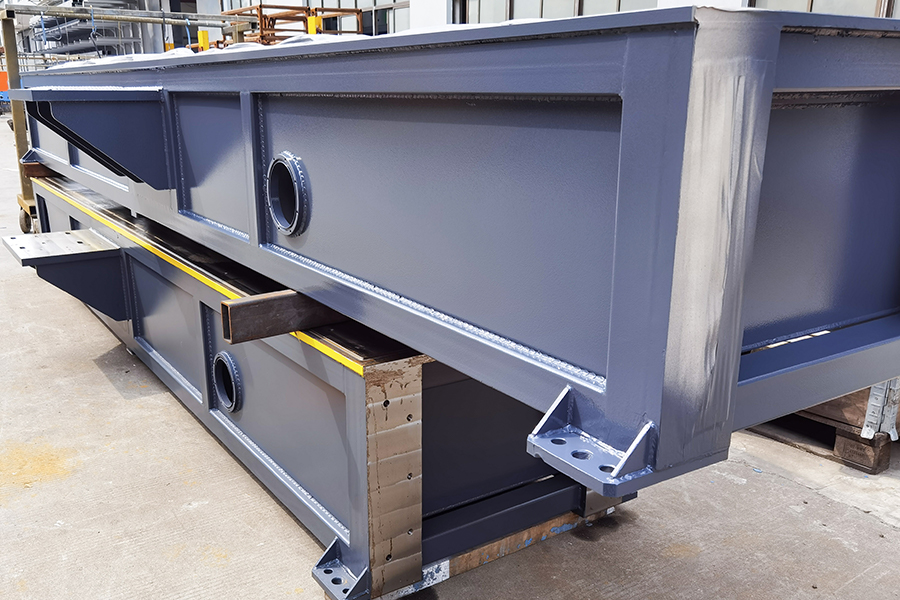
Why Professional Rack Welding Matters More Than You Think The structural integrity o...
READ MORE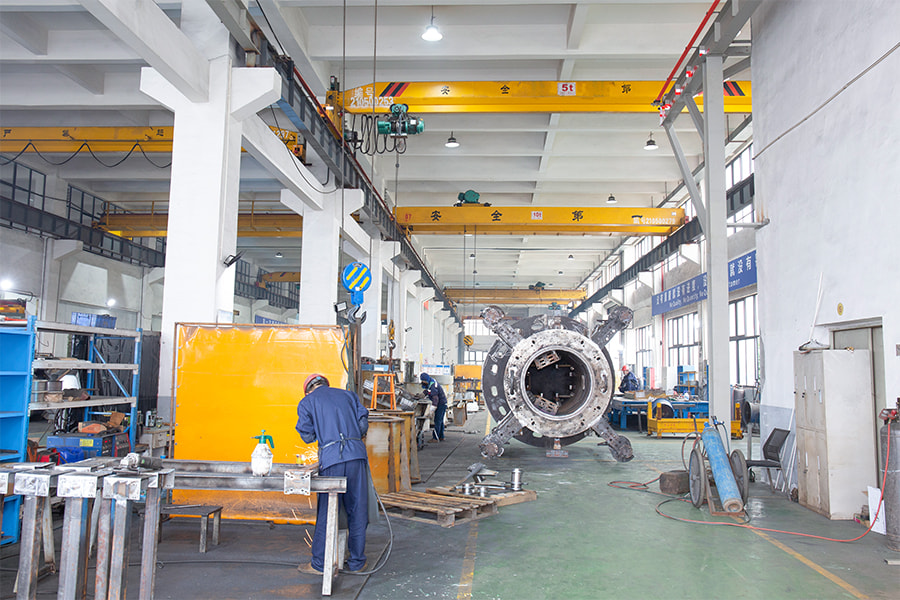
Large-scale construction projects demand materials and processes that guarantee reli...
READ MORE
Steel structure frame welding is a critical process in modern construction and indus...
READ MORE
No.158, Baoqun Road, Yaozhuang Town, Jiashan County, Jiaxing City, Zhejiang Province , China
0086 13857303563
+86-573-84893330 / +86-573-84518277
leo@weldmanufacture.com
sales@dingshijx.com
product