English
 日本語
日本語
 Deutsch
 Español
No.158, Baoqun Road, Yaozhuang Town, Jiashan County, Jiaxing City, Zhejiang Province , China

Content
Welding processing is a crucial manufacturing technique used to join materials, typically metals or thermoplastics, by using heat, pressure, or a combination of both. It plays a pivotal role in industries ranging from automotive to construction, aerospace, and heavy machinery, where structural integrity is essential.
Welding processing is a broad term that covers a variety of methods used to fuse two or more materials. These methods typically involve the application of heat or pressure, or both, to create a permanent bond. The process can be used to join metals, plastics, and other materials, with welding being one of the most common techniques in metalworking.
The fundamental principle behind welding is to melt the base material (and often a filler material) to form a molten pool, which, upon cooling, solidifies into a strong bond. This bond is typically stronger than the base material itself. The choice of welding technique depends on factors such as the type of material, thickness, required strength, and the working environment.
There are several types of welding methods, each with specific advantages and limitations. Here are the most widely used methods in industrial welding processing:
Shielded Metal Arc Welding (SMAW), or stick welding, is one of the most common forms of arc welding. It uses a consumable electrode coated in flux to create the weld. The electrode is heated by an electric arc between it and the workpiece, which melts both the electrode and the base material to form a strong joint.
Gas Tungsten Arc Welding (TIG) uses a non-consumable tungsten electrode to produce the weld. An inert gas, typically argon, is used to shield the weld area from contamination. TIG welding is known for its precision and ability to weld thin materials.
Metal Inert Gas (MIG) welding, also known as Gas Metal Arc Welding (GMAW), uses a continuous wire feed as the electrode, which melts and fuses with the base material to create the weld. MIG welding is fast, clean, and efficient, making it popular in large-scale manufacturing.
Laser welding uses a high-powered laser beam to melt the base material and create the weld. This method is commonly used in high-precision industries such as aerospace and automotive manufacturing.
Steel structure manufacturing is one of the key industries that rely heavily on welding. The strength and durability of welded joints in steel structures are vital for the overall integrity of the structure. Whether in construction, machinery, or heavy equipment, welding ensures that the joints hold up under stress and remain durable over time.
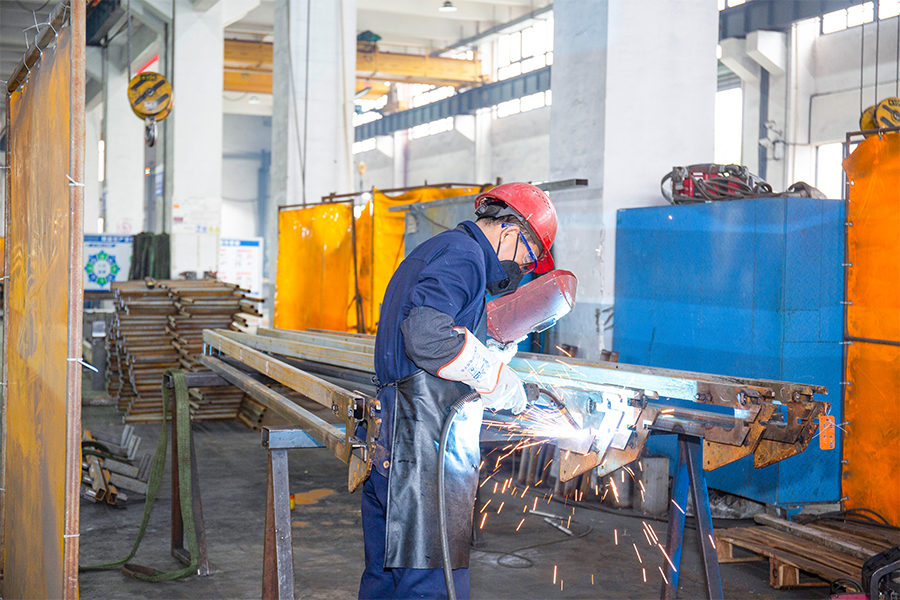
Welding processing in steel structure manufacturing involves various processes, including cutting, bending, leveling, welding, and assembly. To ensure high-quality results, a Chinese welding processing factory, like Jiaxing Dingshi Machinery Manufacturing Co., Ltd., utilizes advanced welding technology and equipment. The factory’s welding processes comply with international standards and customer specifications.
In a welding processing factory, various factors such as welding materials, methods, and environmental conditions are considered to guarantee strong, reliable, and defect-free joints. The factory employs highly trained welders who are proficient in various welding techniques and can adapt to the requirements of different steel structures.
The importance of welding processing cannot be overstated in industries that require strong, durable, and precise metal joining. The final product must meet stringent safety and quality standards. Therefore, it’s critical for welding to be carried out under strict guidelines and with the latest equipment.
Since its establishment in 2014, Jiaxing Dingshi Machinery Manufacturing Co., Ltd., a leading Chinese welding processing factory, has been at the forefront of providing custom welding solutions. The company offers a wide range of services, including cutting, bending, curling, leveling, welding, machining, shot blasting, sandblasting, spraying, painting, and assembly.
As a certified manufacturer, Dingshi Machinery adheres to strict international standards, including EN1090, ISO3834, ISO9001, ISO14001, and ISO45001. The company’s welders are highly skilled and undergo extensive training to ensure that each welded joint meets the highest strength and quality standards. Whether it’s arc welding (SMAW), argon-arc welding (TIG), gas welding, or laser welding, Jiaxing Dingshi Machinery uses the most appropriate method for each job.
| Welding Method | Applications | Advantages | Disadvantages |
|---|---|---|---|
| Arc Welding (SMAW) | Heavy-duty metal structures | Portable, cost-effective | High spatter, less precision |
| Gas Tungsten Arc Welding (TIG) | Precision welding of thin metals | High precision, clean welds | Slower, requires high skill level |
| Gas Metal Arc Welding (MIG) | Fast production welding | Fast, minimal spatter | Requires controlled environment |
| Laser Welding | Aerospace, automotive industries | Precise, minimal heat-affected zone | Expensive, complex setup |
1. What are the key advantages of welding processing?
Welding processing provides durable, high-strength joints that are critical for ensuring structural integrity. It is versatile and can be used on a variety of materials and thicknesses.
2. Why is welding processing essential in steel structure manufacturing?
Welding is essential in steel structure manufacturing because it creates strong, reliable joints that ensure the structure can withstand external forces, vibrations, and environmental conditions.
3. What are the different welding methods used in industrial processing?
Common welding methods include Arc Welding (SMAW), Gas Tungsten Arc Welding (TIG), Gas Metal Arc Welding (MIG), and Laser Welding. Each method has its own advantages and is suited for specific applications.
Why Steel Structure Frame Welding Fails: A Practical Diagnosis Guide Steel structure...
READ MORE
Storage racks carry heavy loads day after day, often for decades. The welds that ho...
READ MORE
Understanding Heavy-Duty Steel Structure Welding Large-scale construction and indust...
READ MORE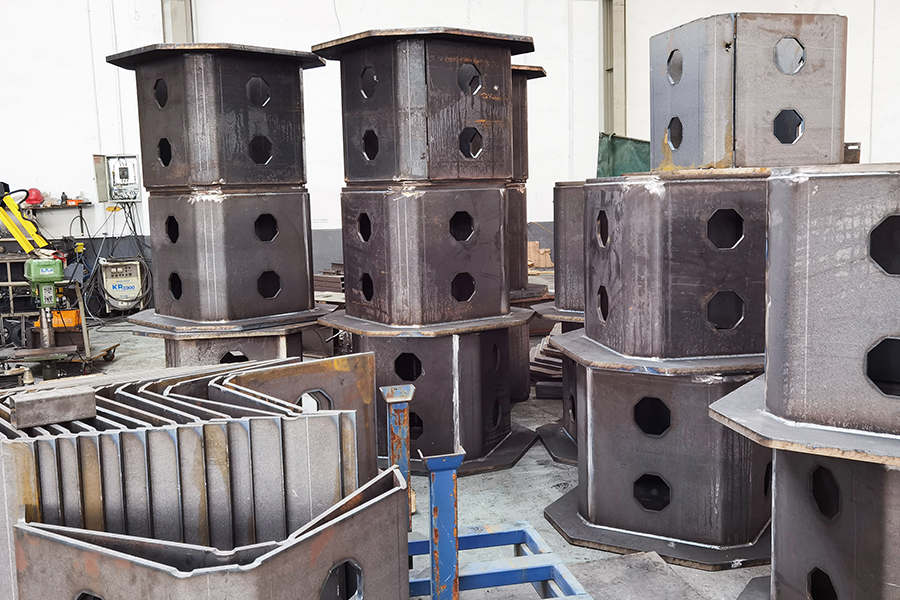
Why Equipment Structural Framework Welding Demands More Than Just a Welder Not all w...
READ MORE
No.158, Baoqun Road, Yaozhuang Town, Jiashan County, Jiaxing City, Zhejiang Province , China
0086 13857303563
+86-573-84893330 / +86-573-84518277
leo@weldmanufacture.com
sales@dingshijx.com
product